Showing posts with label Top Places. Show all posts

Sunday, September 25, 2011

Chamba Himachal Pradesh,India -Information and Photos


Chamba (Hindi:chamba) is an ancient town in the Chamba district in the state of Himachal Pradesh, in northern India. According to the 2001 Indian census, Chamba has a population of 38,312 people. Located at an altitude of 996 metres (3,268 ft) above mean sea level, the town is situated on the banks of the Ravi River (a major tributary of the Trans-HimalayanIndus River), at its confluence with the Sal River.
Though historical records date the history of the Chamba region to the Kolian tribes in the 2nd century BC, the area was formally ruled by the Maru dynasty, starting with the Raju Maru from around 500 AD, ruling from the ancient capital of Bharmour, which is located 75 kilometres (47 mi) from the town of Chamba.In 920, Raja Sahil Varman (or Raja Sahil Verma) shifted the capital of the kingdom to Chamba, following the specific request of his daughter Champavati  (Chamba was named after her). From the time of Raju Maru, 67 Rajas of this dynasty have ruled over Chamba until it finally merged with the Indian Union in April 1948, although Chamba was under British suzerainty from 1846 to this time.
The town has a large number of temples and palaces,and hosts two popular jatras (fairs), the "Suhi Mata Mela" and the "Minjar Mela", which last for several days and involve music and dancing. Chamba is also well noted for its arts and crafts, particularly its Pahari paintings, which originated in the Hill Kingdoms of North India between the 17th and 19th century and its handicrafts and textiles.
Chamba Himachal Pradesh,India -Information and Photos
The Ravi River flowing through Chamba
Panorama of the upper part of the town and mountains surrounding it
View of Chamba Town
Gopal Singh, Raja of Chamba (ruled 1870-1873)
Laxmi Narayan temple in Chamba
Chamba, Himachal Pradesh
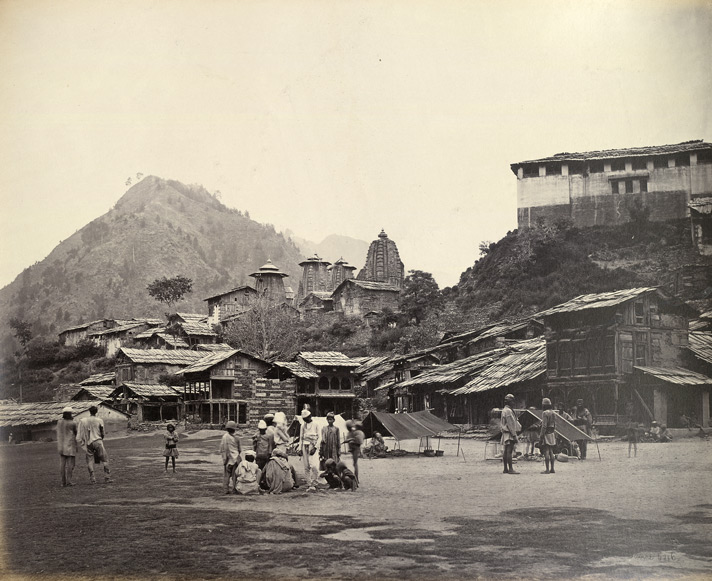
Chumba. Bazar & Temples in 1860
 Chamba, Himachal Pradesh in 2009
Chamba from across the river, Himachal Pradesh.
View of Chaugan at Chamba
Bhuri Singh Museum. Chamba, Himachal Pradesh

Description =Varaha avtar of Vishnu, killing a demon to protect the Earth, and the earth goddess, Bhu or Bhu devi, which he lifts on his tusks above the black ocean. c1740.
gouache on paper. probably Chamba, Pahari region, north India.( Date;c1740)
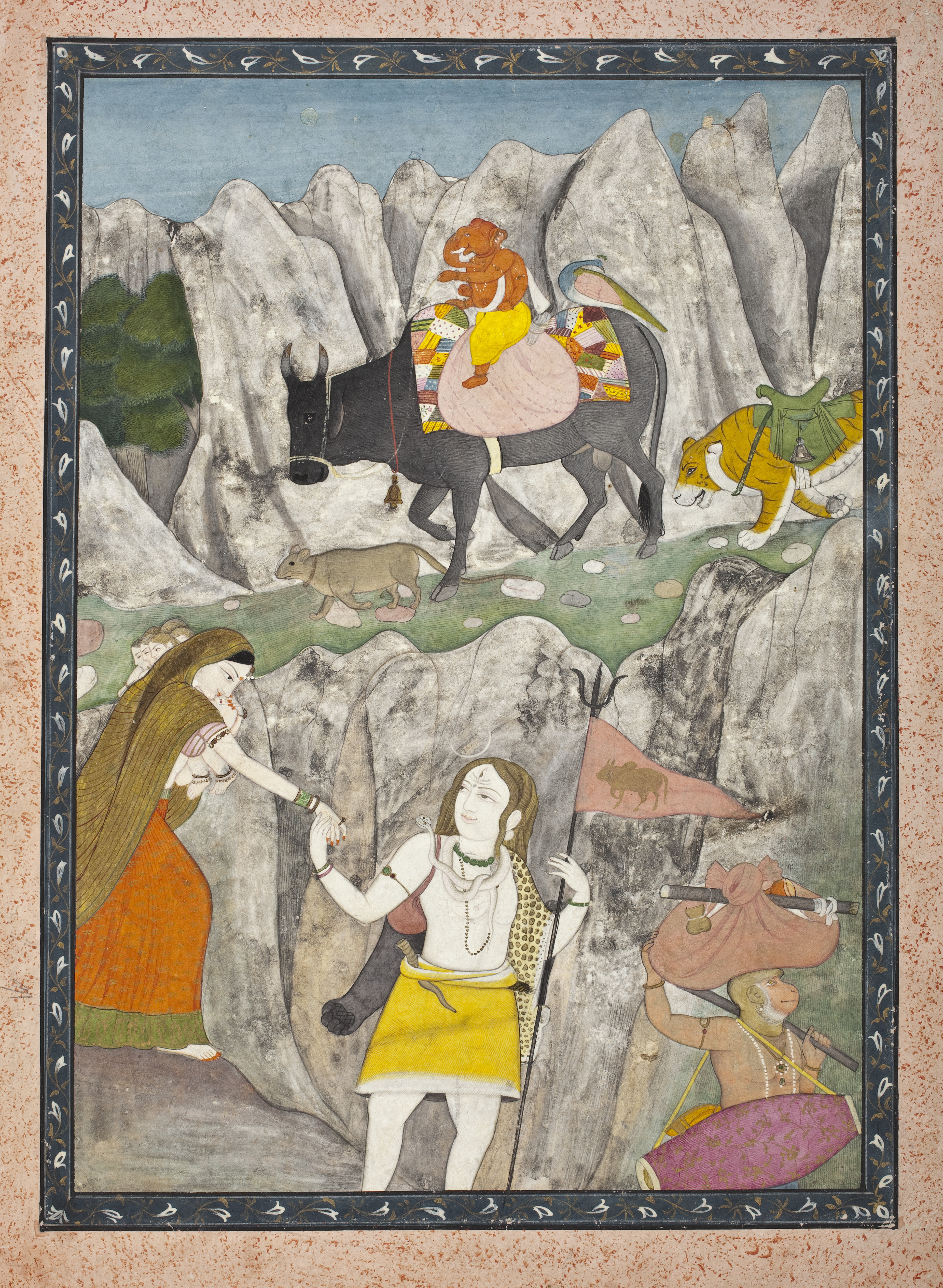
Pahari painting of Chamba dated 1800– depicts godShiva’s Family on the March.
The Chaugan in Chamba, where fairs are held
Bridge on Budhil River Manimahesh Lake Chamba Himachal Pradesh
chamba himachal pradesh map

Top Ten Most Rainiest Places in the world


1# Crkvica, Bosnia and Herzegovina
Although the country of Bosnia and Herzegovina is devoid of coastline, save for a scant shore of the Adriatic, it nonetheless receives a fair amount of rain, most notably in Crkvica. 
The town in Bosnia, just northwest of Sarajevo, consistently receives the highest annual average precipitation in Europe. So much for London’s reputation.
2# Henderson Lake, British Colombia, Canada
People who live outside of British Columbia in Canada, especially those in Toronto and Montreal, where long winters are the norm, love to chide residents of the province for their temperate but rainy climate. 
There is no small amount of jealousy behind the tactic, because not only is Vancouver – the main city in British Columbia – a beautiful place to live, it also happens to be the only place in Canada where one can golf in February. However, the rain is not just a cliche here, but a meteorological reality. Just ask residents of Henderson Lake.
Stay dry in beautiful Vancouver with a great hotel deal.
3# Andagoya, Colombia
We seldom think of Colombia as a country so pluvial but it does in fact have several climactic challenges that pose real threats. In fact, the country is a world rarity, in that it belongs to a select few with a classification as megadiverse. This superpower-like designation insinuates that Colombia, because of geographic position, has crazy weather fluctuations. 
Indeed, with five natural regions that include high mountains, tropical deserts and steppes, the rainy season here is notorious. The town of Andagoya, with a position smack dab on the thermal equator, has a temperature that rarely shifts more than a few degrees from month to month and in turn, receives torrents of rain.
4# Bellenden Ker, Queensland, Australia
Another megadiverse country, perhaps more so than any other on the planet, is Australia. With desert, mountains, ocean and tropical rainforests, the country continent is unlike any other. 
The area of Bellenden Ker and indeed, the mountain of the same name, is a World Heritage Rainforest zone. A short drive from the city of Cairns, the region is lush, rife with exotic plant and animal life and indeed a victim of mass precipitation.
5# Quibdo, Colombia
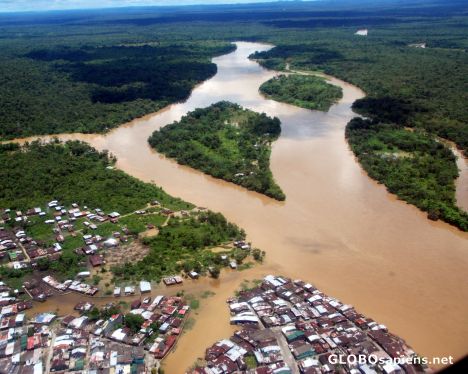
Colombia proves to be wet all over once again with the town of Quibdo. Over 100,000 people live in the capital of the Choco Department, as the national divisions are known as. On the border of Panama and indeed, the gateway between South and Central America, the department and town receive some of the most zany weather in Colombia. 
Unfortunate because in addition – or perhaps because of which – Quidibo has some of the worst social conditions and economic track records in the country. In point of fact, despite record rainfall every year, the lowland town still manages to suffer from water shortages.
6# Debundscha, Cameroon
Cameroon has a reputation for being one of the most exotic and beautiful nations in Africa. Indeed, it encompasses the principal features of the continent on a small scale, with hyper diversity in a region about the size of California. As a result of course, parts of Cameroon receive super heavy rainfall. 
This tends to be the case when you have ocean coastline, tropical forests, grasslands, deserts and mountains within close proximity to each other. At the base of Mount Cameroon and within plain view of the Bight of Biafra, Debundscha receives over 400 inches of rain a year.
7# Cherrapunji, India
Another region with rainfall levels well above 400 inches, Cherrapunji shares another notorious distinction with other wet areas. In utter bewilderment and stark contrast to the weather, the town in the state of Meghalya confronts epic water shortage problems. 
Geography conspires to make Cherrapunji so wet and also devoid of potable water by the same token. At the confluence of the Kashi Hills and Bay of Bengal, the town receives both north and south monsoon showers that pound the area in a flash, only to flood down the plains of Bangladesh. No suprise then that Cherrapunji holds the record for most rainfall in one year at over 900 inches back in 1860-61.
8# Mount Waialeale, Kauai, Hawaii, United States of America
Although not exactly a residential area, the region around Mount Waialeale and indeed the summit, receives a ton of precipitation on a habitual basis. Tourism officials in Hawaii love to boast that this is the wettest place on the planet, although some in India and Colombia take issue with the claim. 
Whatever the case may be, the rainfall in Kauai is notable for the fact that it occurs with such daily regularity. Mount Waialeale bears the brunt of the precipitation because of a conical shape and pure geographical position relative to the ocean and trade winds. Although open to tourism, there are obvious physical impediments here due to the amount of rain that falls every day. In other words, the ground is super wet.
9# Mawsynram, India
Another village in the Kashi Hills in the state of Meghalya, Mawsynram proves once again that India is a complex and diverse country. A quick drive from Cherrapunji, the town records indicate more annual rainfall, although disputes about data accuracy have been rife as both regions fight for rainfall supremacy. 
Whatever the case may be, Mawsynram appears to have a more favorable – or is that cursed? – position in terms of proximity to the Bay of Bengal and steep incline of the Kashi Hills, which allows humid, moist air to ascend and in turn, blanket the area with rain.
10# Lloro, Colombia
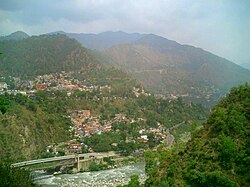
Lloro, Colombia-
The town and municipality of Lloro is another area within the Choco Department of Colombia prone to rain. A lot of rain. With coastlines on the Pacific and Caribbean, unique in the country, the area is an ecological freak of sorts and as a result, the victim of zany phenomena. Average annual precipitation in the town of Lloro is 523.6 inches, which ranks it first in terms of wet world zones. With over 7,000 inhabitants, one has to wonder how people here cope with almost 1.5 inches of rain a day.
Lloro Colombia Wettest Place on Earth Most Rain Fall

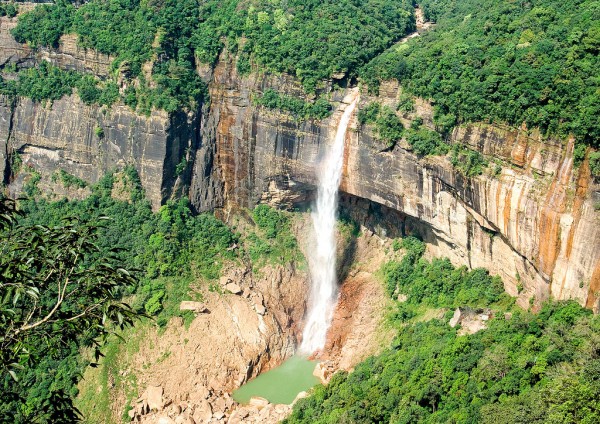
Cherrapunji - The Rainiest Place On Earth, India

Cherrapunji - The Rainiest Place On Earth, India
Shillong, Cherapunzi (rainiest place on theEarth) , Kajiranga National Park
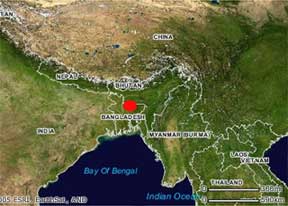
Map Of Cherrapunjee- The Raniest place In the World

Cherrapunjee
1300 m above sea level, known all over the world as the rainiest place on the planet.
Cherrapunjee is 160 km from Guwahati.
Cherrapunji - The Rainiest Place On Earth, India
The dampest place on earth lies in the state Meghalaya in the Northeast of India. It’s also known as “The Abode of Clouds”. The moist-warm air, which is blown across during the Monsoon from the Bay of Bengal, ascends over the Khasi hills. The clouds grow stronger and then it rains…and rains…and rains. The world record of rainfall per year (from 1952 – 1962) was measured in the village Mawsynram. Averagely 13.108 liters/m² fall here each year and therefore hold the title of “wettest place on earth”. New measures near the city Cherrapunji (the second wettest place on earth) show a similar amount of rain.

Tuesday, September 20, 2011

World's Tallest Building and Largest Shopping Mall --Burj In Dubai

World's Tallest Building and Largest Shopping Mall

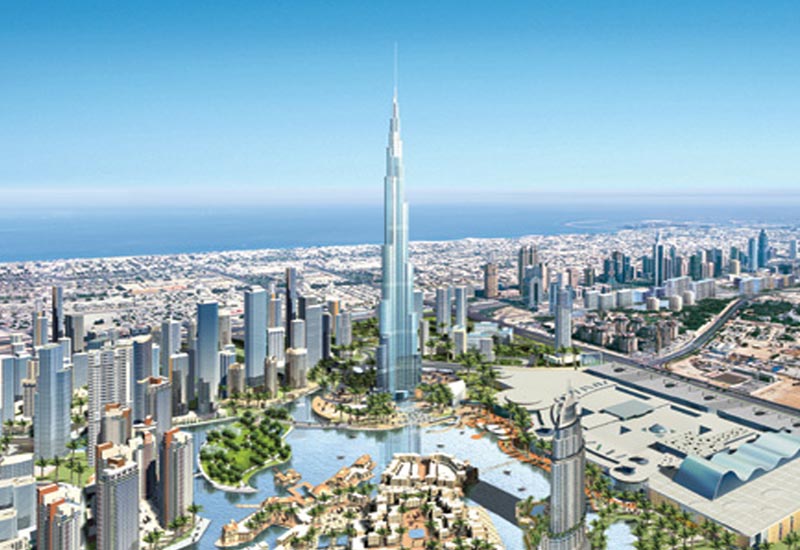
2004 The construction of what will become the world's tallest building - the Burj Tower in Dubai - will commence in January, 2005, with plans for the 800 metre tall, 160 floor skyscraper to be completed by 2008. The building will also contain residential, commercial, hotel and entertainment facilities, including the largest shopping mall in the world. Located on Sheikh Zayed Road, the complex will contain a city within a city - a planned Old Town with intimate streets and architectural detail to create a special ambience with the mystery of yesterdays Arabia, in what is expected to be the centrepiece of the Gulf region's most prestigious urban development.
World's Tallest Building and Largest Shopping Mall
Burj Dubai Tower was commissioned by Emaar Properties, as part of its US $8 billion Downtown Dubai development project. Built of glass, aluminium, concrete and steel, Burj Tower will be the tallest building in the world at 800 metres (2,640 feet), with a total floor space of 500,000 sq m (5.35 million sq ft). Taipei 101 in Taiwan (509 metres), Petronas Towers in Malaysia (452 metres) and the Chicago's Sears Tower (442 metres) are currently the world's highest man made towers. Recently China and the New York World Trade Centre redevelopment have announced plans to exceed these records, but the Burj Tower has anticipated challengers and will dig extra-deep foundations to enable more storeys to be added later if needed.
World's Tallest Building and Largest Shopping Mall
Chicago-based Skidmore, Owings & Merrill architectural consultants have drawn their inspiration from the historical influences of the Gulf. The tower's base and geometry reflects the six-petal desert flower of the region as well as indigenous Islamic patterns. The base of the Burj Dubai blossoms to allow the tower a graceful transition from the ground and to maximise views, while the dome shaped plan profile accentuates a series of steps up the vertical height of the building. The top of the Tower will contain a public observation deck and a private club will be situated above that.
The Burj Dubai Tower will be constructed by South Korea's Samsung Corporation and should be completed by November, 2008.
Word's largest Mall
World's Tallest Building and Largest Shopping Mall
In the shadow of the Burj Tower will be another ambitious development - the Dubai Mall - the largest shopping space in the world with over nine million feet of retail, residential and entertainment facilities, including the world's largest gold souq market and an ice rink. The mall will also host over 1,000 specialty shops located within the ten to fifteen distinct 'malls-within-a-mall'. It will offer an array of leisure pursuits, including a three storey aquarium featuring glass tunnels where you can slide right through and come face to face with sharks, sting rays and other exotic marine life. It will also feature an 850,000 square feet fashion island comprising high and mid-fashion that will pay homage to haute couture and host just about every major fashion brand in the world. When finished in 2006, Dubai Mall will be larger than 50 international soccer pitches and is expected to attract over 35 million visitors in the first year of operations.
The Burj Dubai Boulevard will open out at intervals in four main piazzas (named Piazza of Water, Wind, Fire and Earth) that leads to Tower Park, surrounding Dubai Tower. Tower Park will contain 15 hectares of land containing water cascades, manicured lawns and exotic plant terraces. There will also be 16,000 underground car parking spaces, with more parking above ground.
The Residences
World's Tallest Building and Largest Shopping Mall
The Residences comprises 6 exclusive towers at the world's most prestigious address - the Burj Dubai. The Residences is an integrated development within the 20 acres of land embracing a spectacular man-made lake, the world's tallest tower and world's largest shopping centre. Construction is already underway and the Residences will feature one, two and three bedroom luxury apartments.
The homes at the Residences feature two distinct design themes, elegantly expressed in sculpted woodwork and rich finishes. The interiors of the Andalucia style bring a modern interpretation of Arabic culture through Islamic patterns and details. The cool refinement of the Metropolitan style is also offered in sleek contemporary fittings and designs. Those making the Residences their home will have immediate access to hotels, entertainment and shopping plus exceptional amenities - such as fitness centres, guest suites and exclusive resident concierge services.
Development in Dubai
World's Tallest Building and Largest Shopping Mall
Real estate development in Dubai is rapidly transforming the Gulf state with innovative and breathtaking projects like 'The World", an artificial archipelago that replicates a scale model of the world with all major land masses, as well as replicas of lost cities from different parts of the ancient world. Two visionary artificial island environments have also been created just off the coast of Dubai - the "Palm, Jebel Ali" and the "Palm Jumeirah", both palm tree shaped land masses surrounded by hemispherical reefs, customised and developed for luxury living, with five star hotels and exclusive retail outlets dotted along the trunk of the palm. Together with the Burj Dubai Tower and the Dubai Mall, these ambitious urban redevelopments show the face of the United Aab Emirates is rapidly changing and leading the way in 21st century design and modern living.
World's Tallest Building and Largest Shopping Mall