Showing posts with label Science. Show all posts

Friday, November 18, 2011

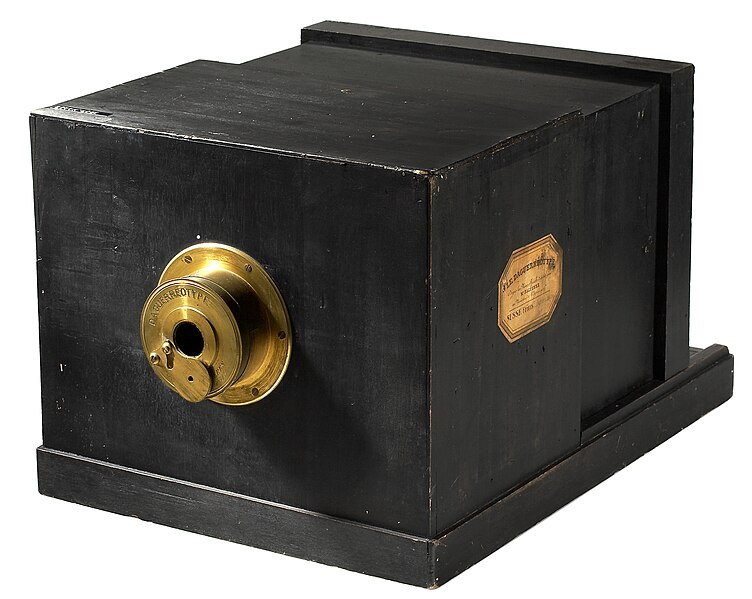
Louis Daguerre Daguerreotype


History and Development of Forensic Science up to the 20th Century

Key People

  • Fortunatus Fidelis- first person to practice forensic medicine
  • Sir Francis Galton- developed first basic system for classifying fingerprints based on grouping the patterns into arches, loops, and whorls
  • Alphonse Bertillion- French criminologist who applied techniques of human body measurement used in anthropological classification to the identification of criminals
  • Zacharias Janssen- Dutch lens-maker who invented first compound microscope


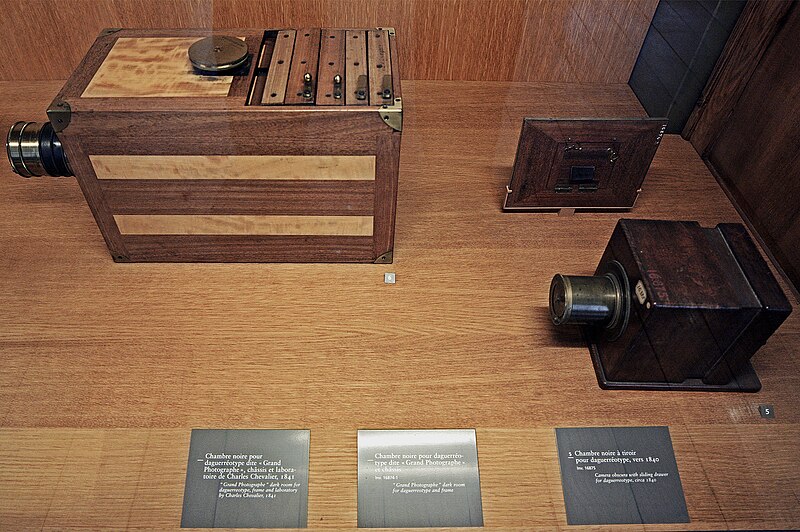
    1850_Daguerreotype_Camera.jpg
  • Louis Daguerre- first photograph- "daguerreotype"
  • Mathieu Orfila- “Father of Toxicology,” wrote Traite des Poisons
  • William Talbot- invented the photographic negative
  • Henry Goddard- first to trace bullet back to gun successfully
  • Cesare Lombroso- said criminals had certain physical features
  • Francesco Patrizi- made early type of lie detector that failed


Key Terms


  1. Forensic medicine- application of medical knowledge to legal questions


  1. Compound microscope- microscope with more than one lensi1.gif
  2. Forensic science- scientific method of collecting and gathering evidence.
Mathieu Orfila

Case Study

France, 1840: A 24-year-old woman named Marie Lafarge was charged with poisoning her husband. She had been seen buying arsenic "to kill her rats" and it was also rumored that she was unhappy with her marriage. Lawyers on both sides were arguing and the methods scientists used to prove that Lafarge had killed her husband kept being doubted or disproved. Both sides agreed to consult Mathieu Orfila, "Father of Toxicology." Orfila took samples from the husband's body and the soil that he was buried in. Orfila found traces of arsenic in the body and proved that it did not come from the surrounding soil, making the jury decide that Lafarge was guilty and she was sentenced to life in jail.
Source; northcrossschoolforensics.wikispaces.com

Louis Daguerre Daguerreotype Process

1840-1841 Camerae obscurae and plates for Daguerreotype called "Grand Photographe" produced by Charles Chevalier (Musée des Arts et Métiers).
Daguerreotype Process  The daguerreotype, along with the Tintype, is a photographic image allowing no direct transfer of the image onto another light-sensitive medium, as opposed to glass plate or paper negatives. Preparation of the copper plate prior to image exposure resulted in the formation of a layer of photo-sensitive silver halide, and exposure to a scene or image through a lens formed a latent image. The latent image was made visible, or "developed", by placing the exposed plate over a slightly heated (about 30°C / 90°F) cup of mercury. Daguerre was first to discover and publish (in the publication of the process and the English patent of 1839) the principle of latent image development.
The mercury vapour condensed on those places on the plate where the exposure light was most intense (highlights), and less so in darker areas of the image (shadows). This produced a picture in an amalgam, the mercury washing the silver out of the halides, solubilizing and amalgamating it into free silver particles which adhered to the exposed areas of the plate, leaving the unexposed silver halide ready to be removed by the fixing process. This resulted in the final unfixed image, which consisted of light and dark areas of grey amalgam on the plate. The developing box was constructed to allow inspection of the image through a yellow glass window to allow the photographer to determine when to stop development.
The next operation was to "fix" the photographic image permanently on the plate by dipping in a solution of hyposulphite of soda, often called "fixer" or "hypo", to dissolve the unexposed halides. Initially, Daguerre's process was to use a saturated salt solution for this step, but later adopted Herschel's suggestion of sodium thiosulphate, as did W. H. F. Talbot.
The image produced by this method is extremely fragile and susceptible to damage when handled. Practically all daguerreotypes are protected from accidental damage by a glass-fronted enclosure. It was discovered by experiment that treating the plate with heated gold chloride both tones and strengthens the image, although it remains quite delicate and requires a well-sealed enclosure to protect against touch as well as oxidation of the fine silver deposits forming the blacks in the image. The best-preserved daguerreotypes dating from the 19th century are sealed in robust glass cases evacuated of air and filled with a chemically inert gas, typically nitrogen.

Daguerreotype Proliferation

André-Adolphe-Eugène Disdéri and Jules Itier in France, and Johann Baptist Isenring in Switzerland, became prominent daguerreotypists. In the United Kingdom, however, Richard Beard bought the British daguerreotype patent from Miles Berry in 1841 and closely controlled his investment, selling licenses throughout the country and prosecuting infringers.Among others, Antoine Claudet andThomas Richard Williamsproduced daguerreotypes in the U.K.

Advertisement for a traveling Daguerreotype photographer, with location left blank
Daguerreotype photography spread rapidly across the United States. In the early 1840s, the invention was introduced in a period of months to practitioners in the United States by Samuel Morse, inventor of the telegraph code. One of these original Morse Daguerreotype cameras is currently on display at the National Museum of American History, a branch of the Smithsonian, in Washington, DC. A flourishing market in portraiture sprang up, predominantly the work of itinerant practitioners who traveled from town to town. For the first time in history, people could obtain an exact likeness of themselves or their loved ones for a modest cost, making portrait photographs extremely popular with those of modest means. Notable U.S. daguerreotypists of the mid-19th century included James Presley Ball,Samuel Bemis,Abraham Bogardus,Mathew Brady,Thomas Martin Easterly,François FleischbeinJeremiah GurneyJohn Plumbe, Jr.,Albert Southworth, Augustus WashingtonEzra Greenleaf Weld,] and John Adams Whipple.
This method spread to other parts of the world as well. In 1857, Ichiki Shirō created the first knownJapanese photograph, a portrait of his daimyo Shimazu Nariakira. This photograph was designated anImportant Cultural Property by the government of Japan.
The daguerreotype is commonly, erroneously, believed to have been the dominant photographic process into the late part of the 19th century in Europe. Evidence from the period shows that it was in widespread use for less than twenty years before being superseded by other processes:
  • The calotype, introduced in 1841; a negative-positive process using a paper negative.
  • The collodion wet plate process, introduced in 1851; a negative-positive process using halide-impregnated collodion poured from a bottle onto a glass plate and sensitized by immersion in a silver nitrate bath.
The collodion wet plate process was used to produce ambrotypes on glass and tintypes or ferrotypes on a coated iron plate.
  • The ambrotype, introduced in 1854; a negative image on glass which appeared positive when on dark "ruby" glass or backed with a black varnish or cloth.
  • The tintype or ferrotype, introduced in 1856; an image like the ambrotype, but on a thin blackened iron plate instead of glass.

Daguerreotype Demise

The intricate, complex, labor-intensive daguerreotype process itself helped contribute to the rapid move to theambrotype and tintype. The proliferation of these simpler and much less expensive photographic processes made the costly daguerreotypes less appealing to the average person (although it remained very popular inastronomical observatories until the invention of glass plate cameras). According to Mace (1999), the rigidity of these images stems more from the seriousness of the activity than a long exposure time, which he says was actually only a few seconds (Early Photographs, p. 21). The daguerreotype's lack of a negative image from which multiple positive "prints" could be made was a limitation also shared by the tintype, but was not a factor in the daguerreotype's demise until the introduction of the calotype. The fact that many of those to use the process suffered severe health problems or even death from mercury poisoning after inhaling toxic vapors created during the heating process also contributed to its falling out of favor with photographers. Unlike film and paper photography however, a properly sealed daguerreotype can potentially last indefinitely.
The daguerreotype's popularity was not threatened until photography was used to make imitation daguerreotypes on glass positives called ambrotypes, meaning "imperishable picture" (Newhall, 107).

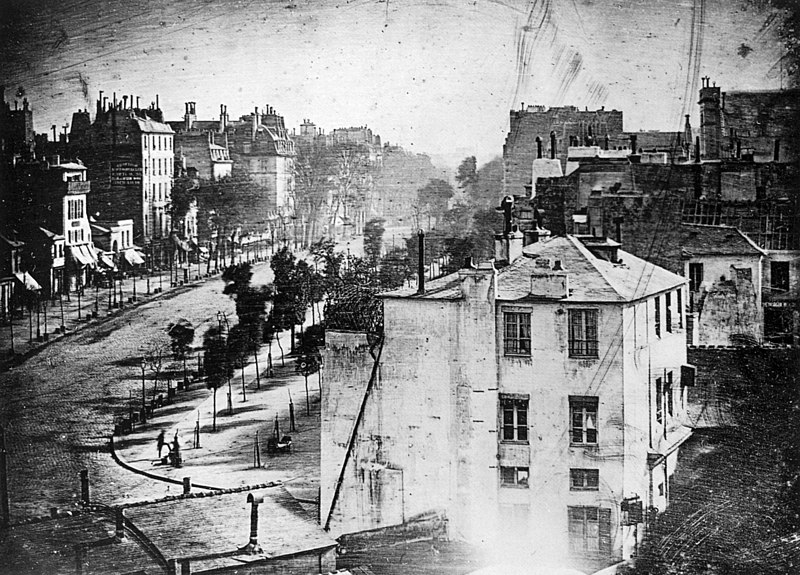
Boulevard du Temple by Daguerre

 Boulevard du TempleParis, 3rd arrondissement, Daguerreotype. The purportedly first picture of a living person. The image shows a busy street, but due to exposure time of more than ten minutes, the traffic was moving too much to appear. The exceptions are the two people at the bottom left, one who stood still getting his boots polished by the other long enough to show. Look closely and you will also see another man sitting on a bench to the right reading a newspaper. Also in the upper left hand side you can also see another man standing under the awning of the 3rd building from the left. What looks to be a woman standing under the street lantern at 10 o'clock from the man getting his shoes shined and another one in the big white building,1st row 3rd window down. Notice the child in the top floor window of the white building in front. Note that the image is a mirror image.
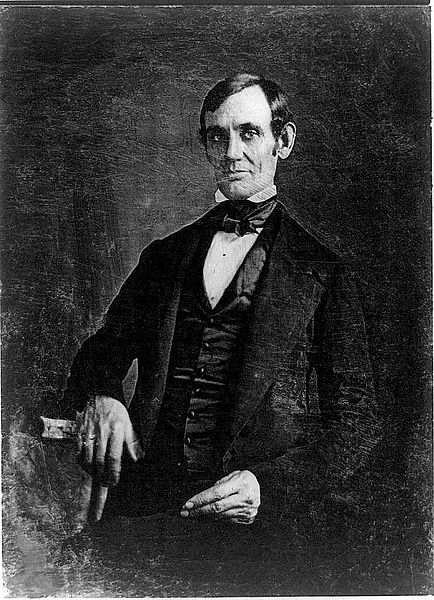
The first authenticated image ofAbraham Lincoln was this daguerreotype of him as U.S.Congressman-elect in 1846, attributed to Nicholas H. Shepard of Springfield, Illinois.

Andrew Jackson-1844

Daguerreotype of Andrew Jackson at age 77 or 78 (1844 or 1845).
A daguerreotype of Shimazu Nariakira, taken by Ichiki Shiro (1828 - 1903)
Photo panorama of San Francisco, 1853

Susse Frére Daguerreotype camera 1839

Wednesday, March 30, 2011

Robert Bunsen Achievements


This edited article about Robert Wilhelm Eberhard Bunsen originally appeared in Look and Learn issue number 917 published on 18 August 1979.
When a new laboratory was built at Heidelberg, in Germany, in 1855, a chemist was asked to look at the various devices proposed for the supply of heat for chemical experiments. A blowlamp was generally used for these, but the scientist wanted something more convenient to handle.
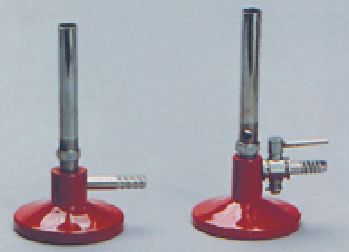
Robert Bunsen's gas burner (F) became part of everyday chemical apparatus
Robert Bunsen’s gas burner (F) became part of everyday chemical apparatus
Finding nothing to suit him, he soon devised a simple means of burning ordinary coal gas with a hot, smokeless flame. His burner was such a good and easy means of obtaining an intense heat that within a short time it became widely used in laboratories. And it remains in use today.
The chemist was Robert Wilhelm Eberhard Bunsen and the device he invented, the bunsen burner, was just one of his many achievements.
The youngest of four sons born to Christian Bunsen, a Prussian diplomat and scholar, Robert was born on 31st March, 1811.
He was educated at Göttingen University, where he studied chemistry, physics, mineralogy, and mathematics. After graduating, Bunsen toured Europe for three years. He visited factories, laboratories and places of geological interest. In October, 1838, he was appointed Professor of Chemistry at Marburg. Subsequently, he spent some time at Breslau, where he met Gustav Kirchoff, with whom he later did important research in spectroscopy.
Appointed to the university of Heidelberg in 1852, Bunsen remained until he retired in 1889 at the age of 78. During this time, as the mastermind at Heidelberg, he made this university one of the great scientific centres of Europe.
Bunsen had begun his first important research at the age of 26, and for six years he had studied compounds of arsenic. In discovering an antidote to arsenical poisoning, he lost the sight of an eye through an explosion. His experiences sapped his enthusiasm for this work, and he left his researches to be carried on by a pupil.
Bunsen had also taken up at the beginning of his career the study of gases given off by blast furnaces. This proved to be of immediate and practical importance. He was able to show that in German furnaces almost half the heat yielded by the fuel was allowed to escape with the waste gases.
Going to Britain to investigate the furnaces, he revolutionised Britain’s methods of producing iron by pointing out that 80 per cent of the heat went up the chimney with the waste fumes, whilst valuable by-products like ammonia were among the gases lost to the atmosphere.
He was able to suggest techniques that could recycle the gases through the furnaces, so using heat that would otherwise be lost. Ways of retrieving valuable escaping materials were also suggested by Bunsen.
Bunsen published his research in his only book Gasometrische Methoden in 1857.
A devoted teacher, Bunsen presented a hundred hours of lectures during each of 74 terms in a course on inorganic chemistry. These kept theoretical aspects to a minimum, for Bunsen was an enthusiast for experimentation. He enjoyed designing apparatus and, being a skilled glassblower, he frequently made his own laboratory glassware. He was also interested in the application of experimental science to industrial problems and he devoted a lot of interest to geology.
In 1841 he ventured into the borderland between chemistry and electricity, as a result of which he invented the carbon-zinc electric cell, also known by his name. By using it to produce an electric arc he obtained, out of a pound of zinc, a light equal to 1,171 candles. Each pound of zinc used in the batteries lasted an hour. Then to measure exactly the candle power of the light he had obtained, Bunsen invented a simple device called a grease-spot photometer.
This uses a white screen with a grease spot at its centre. The sources of light are mounted at opposite sides of the screen. The positions of the lamps are adjusted until the grease spot is no longer distinguishable. The candlepowers can be worked out by squaring the distances of the lamps from the screen.
In 1852 Bunsen began to use his battery in another ingenious way. He passed a current through various solutions, and by so doing separated the constituents. By this means he obtained magnesium in its metallic state and turned his discovery into great significance for photographers by demonstrating the brilliance of magnesium when burnt. He showed how quickly it acted on a photographic plate. Before this, however, he had been able to indulge his interest in geology by accompanying a scientific expedition to Iceland in 1846, the year after the eruption of the volcano Hekla. Sponsored by the Danish government, the expedition lasted nearly four months.
During this time, Bunsen collected gases emitted from the volcanic openings and studied the action of these gases on volcanic rocks. He performed extensive chemical analyses of eruptive rocks, insisting that instead of determining what minerals were in the rock, it was the chemical composition of the rock as a whole which should be ascertained.
Bunsen also explored geysers and made temperature measurements at several depths shortly before one erupted. He found that the temperature of the water in the geyser tube, although high, did not reach boiling point.
He concluded that the driving force for an eruption was supplied by steam that entered the tube under great pressure from volcanic vents at the bottom. As the steam lifted the column of water, the pressure above the water was reduced. This change in the water’s depth results in a lowering of the boiling point and enables the already hot water to boil.
Perhaps it was on this trip that Bunsen gained the idea which enabled him to develop his well-known burner. In analytical chemistry, the burner quickly ousted the blowlamp.
Bunsen also used his burner to identify metals and their salts by their characteristic coloured flames. Other experiments with the burner yielded data for the melting points of metals and rate of evaporation of salts.
In fact, Bunsen was continuously successful as a man of science. In 1868 he worked out methods for separating the metals palladium, ruthenium, iridium, and rhodium that remain in ores after the extraction of platinum, and as part of this project Bunsen constructed a filter pump.
After many other experiments and discoveries he was, in 1842, elected a member of the Chemical Society of London and, in 1882, of the Académie des Sciences of France. The Royal Society honoured him with its Copley medal in 1860 and he received the first Davy Medal in 1877. Finally, Bunsen’s scientific contributions to industry were recognised by Britain’s Society of Arts, which awarded him the Albert Medal in 1898.
On 16th August of the following year, Bunsen died at Heidelberg, which he had helped to make famous and which had provided him with the opportunity for the invention which has earned him immortality.
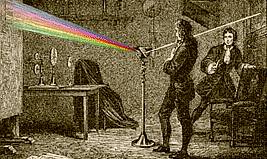
Another of his achievements was so tremendously important that it dwarfs all others. Following a strange discovery made by a fellow worker in 1860, he took a main part in the work of finding out the significance of the thousands of faint dark lines on the band of colour formed by passing sunlight through a prism. By developing his methods it was possible, in the era before space travel, to get photographs of ion-storms and other masses of flaming elements on the sun.
This success was far more illuminating than his burner flame.

Robert Bunsen Inventions


Key accomplishments: toxicology

1702

Richard Mead
First Publication on Poisons
Richard Mead's A Mechanical Account of Poisons in Several Essays is the first book in English devoted entirely to the discussion of poisons.

1752

First Chemical Tests in a Trial
The Mary Blandy case in England is the first reported use of chemical tests to detect arsenic in a legal trial.

1814

Mathieu Orfila
First Toxicology Publication
In France, Mathieu Orfila's Traité des Poisons is the first book devoted entirely to the subject of toxicology. Orfila popularizes the word "toxicology."

1836

James Marsh
Marsh Test Devised
English chemist James Marsh devises a test for identifying trace amounts of arsenic.

1851

Jean-Servais Stas
Alkaloid Poison Test Developed
Belgian chemist Jean-Servais Stas develops a method for detecting vegetable alkaloid poisons (caffeine, quinine, morphine, strychnine, atropine, opium) in dead bodies.

1860

Robert Wilhelm Eberhard Bunsen and Gustav Robert Kirchhoff
Spectrum Analysis Developed
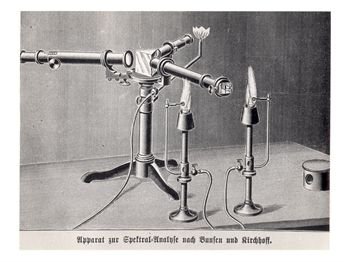
With the aid of the spectroscope, which they invented in 1859, German chemist Robert Bunsen and physicist Gustav Kirchhoff discover that vaporizing a substance creates a unique "signature" spectrum, which can be used to identify it. Using the spectroscope, in 1860, Bunsen and Kirchhoff discover two new alkali metals—cesium and rubidium.

1906

Mikhail Tswett
Paper Chromatography Developed
Italian-born Russian botanist Mikhail Tswett invents paper chromatography, initially to study the make-up of plant proteins such as chlorophyll.

1926

Theodor Svedberg
Ultracentrifuge Developed
Swedish chemist Theodor Svedberg builds the first ultracentrifuge—a machine that separates particles by mass—making it possible to determine precisely the molecular weights of highly complex proteins. Svedberg wins the Nobel Prize for Chemistry in 1926 for his invention of the ultracentrifuge and studies in the chemistry of colloids.

1941

Arnold Beckman, Howard Cary and Warren Baxter at National Technical Laboratories (now Beckman Coulter)
Ultraviolet Spectrophotometer Introduced
The Beckman model DU spectrophotometer is the first instrument to probe the ultraviolet region with high precision and accuracy. According to Bruce Merrifield, Nobel Laureate in chemistry, the DU is "probably the most important instrument ever developed in the advancement of bioscience."

1948

Arne Tiselius
Electrophoresis and Adsorption Developed
During the 1920s and 1930s, Swedish chemist Arne Tiselius helps develop and improve electrophoresis and analysis by adsorption. In 1948, he receives the Nobel Prize in Chemistry for his work.

1950s

New Technologies Incorporated
Ultraviolet and infrared spectrometry, X-ray diffraction, and paper chromatography are applied to forensic science.

1952

Richard L. M. Synge and Archer J. P. Martin
Partition Chromatography Developed
British biochemists Archer J. P. Martin and Richard L. M. Synge demonstrate partition chromatography to the Biochemical Society at a 1941 meeting in London. They share the Nobel Prize in Chemistry in 1952 for their development of partition chromatography.

1953

Gas Chromatography Developed
The first commercial gas chromatograph is manufactured.


1966

New Technologies Incorporated
Fourier-transformed infrared spectroscopy (FTIR), a technique that measures various infrared wavelengths, and atomic absorption spectroscopy, which uses the absorption of light to measure the concentration of gas-phase atoms, are invented.


Robert Bunsen Burner


Bunsen Burner Dimensions


The Bunsen burner is a type of laboratory equipment utilized for combustion and sterilization. It does this by generating a solitary gas flame. It is named after its inventor, Robert Bunsen. 

Bunsen Burner Dimensions 

There are slight variations in the size depending on how the equipment was designed. For example, there are Bunsen burners that measure 4.1" W x 1.9" H x 5.1" D (103 x 49 x 130 mm).
Others measure 5.1" W x 2.9" H x 6.1" D, and still others 4.5" W x 2.5" H x 5.5" D. The burner shaft cover also varies, with some coming at 23 mm and others at 25 mm, 28 mm and other sizes. The burner usually weighs anywhere from a pound to two pounds. 

Features and Usage 

While the Bunsen burner dimensions vary, they will use either natural gas (methane) or LPG (liquefied petroleum gas). In some instances, the burner will use a combination of the two. The hose barb is hooked to the gas nozzle at the lab bench which has rubber tubing. 
Majority of these benches have several gas nozzles linked to a central gas source, steam nozzles, nitrogen and vacuum. The gas goes through the base via a small opening. The opening is at the barrel’s bottom. This is pointed upward. Open slots are on the tube’s side bottom. This is to allow air to get to the stream. 

Lighting Methods and Combustion Reaction 

Whatever the Bunsen burner dimensions are, the most wisely used techniques for lighting is a spark lighter or match. The oxygen amount combined with the gas influences the combustion reaction. 
Less air means an incomplete and cooler reaction. The airflow can be managed by the closing or opening of the slots at the barrel’s base. In many ways this is a lot like the choke in the carburetor. 

Safety and Blue Flames

An adjustment of the collar at the tube will let more air into the gas. This will result in a hotter flame. This will be apparent by the blue color. Closed holes mean gas mixes with ambient air during combustion. This generates a brighter but cooler yellow. 
This is known as a luminous or safety flame. The luminous color is brought about by the soot particles. The yellow flame is regarded as dirty since it leaves behind carbon on anything it is heated on. 
If the Bunsen burner is set up to generate blue flame, keep in mind that it can be difficult to see in some backgrounds. The hottest component of the flame is the inner flame’s tip. The coolest portion is the entire inner flame. 
By boosting the fuel gas flow the dimensions of the flame will go up. Unless the adjustment is correct however, the flame may get cooler because the flame is losing oxygen. The blue flame’s hottest part is over the unburned gas. 
Whatever the Bunsen burner dimensions used, it is imperative that the burner be set on a heat resistant mat prior to lighting it. This will prevent the lab bench from burning up. 

Friday, March 11, 2011

Discovery Shuttle Final Live Landing Video

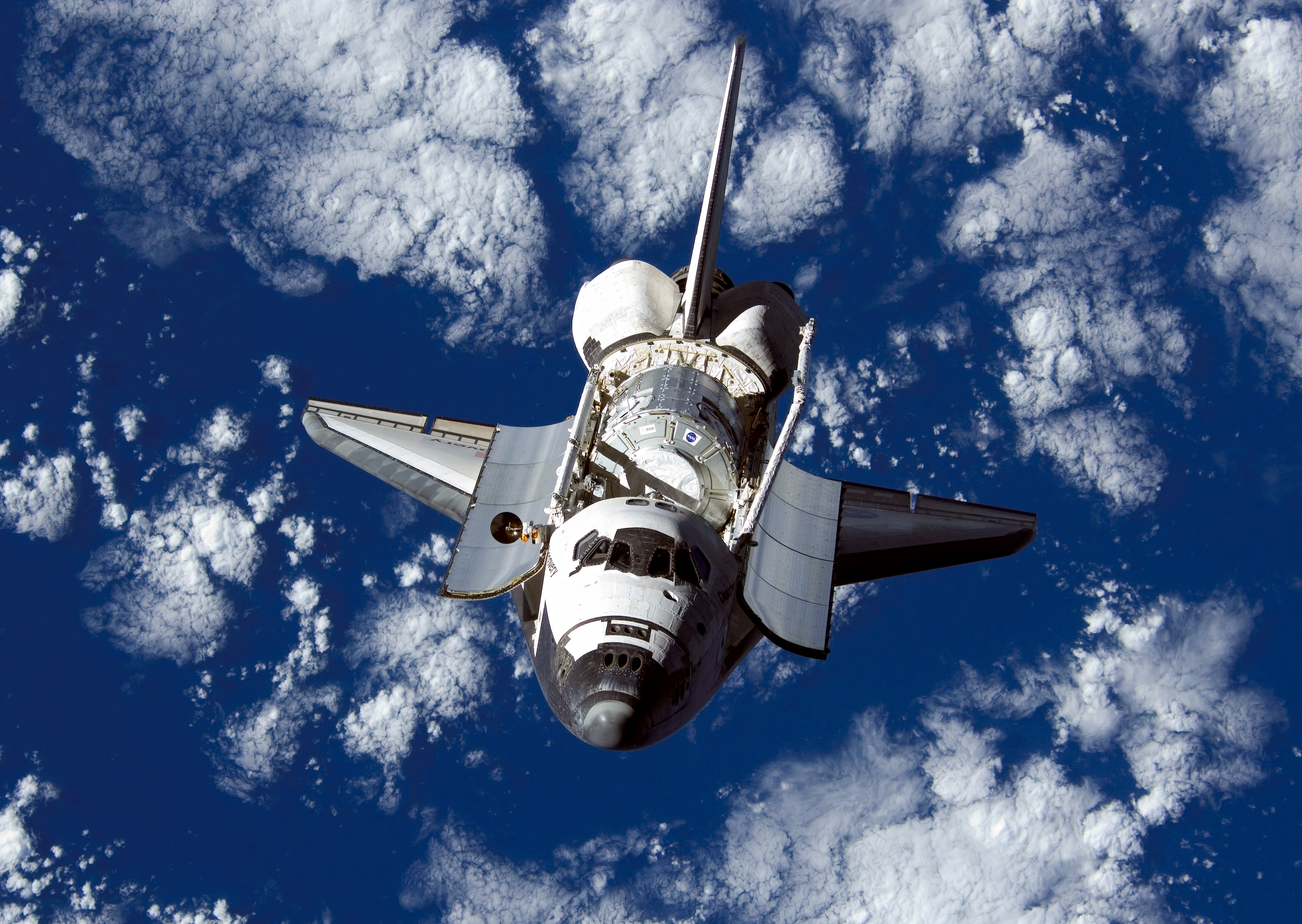
Discovery Shuttle Final Landing

And it’s the final Shuttle Landing for Discovery on this Wednesday 9th of March 2011.  Space shuttle Discovery landed for the last time on earth after its final mission which lasted 13 days and consisted of more than 5 millions miles of travel. This special landing today concludes an illustrious 27-year career of the space craft.The last mission of Discovery was commanded by Steve Lindsey and was joined by Pilot Eric Boe and Mission Specialists Alvin Drew, Michael Barratt, Steve Bowen and Nicole Stott. The shuttle’s crew last mission which consisted both of spacewalks and indoor mission was to deliver an outside storage platform, a robot astronaut prototype, a new pressurized storage module and tons of cargo.

Discovery landing path.
“Discovery is an amazing spacecraft and she has served her country well,” NASA Administrator Charles Bolden said. Bolden said that the success of this mission and those that came before it is a testament to the diligence and determination of everyone who has worked on Discovery and the Space Shuttle Program, over these many years.
Since 1984, Discovery flew 39 missions, spent 365 days in space, orbited Earth 5,830 times and traveled 148,221,675 miles. Discovery was the shuttle that launched the Hubble Space Telescope. The second and third Hubble service missions were also conducted by Discovery. It has also launched the Ulysses probe and three TDRS satellites. Discovery is also remembered to have carried the oldest human being (Project Mercury astronaut John Glenn) to venture into space. John Glenn was 77 at the time (October 29, 1998). A welcome ceremony for the astronauts will be held Thursday, March 10, in Houston.
Discovery Shuttle Final Landing Pictur      

Wednesday, March 9, 2011

List of human spaceflights

These chronological lists include all crewed spaceflights that reached an altitude of at least 100 km (the FAI definition of spaceflight), or were launched with that intention but failed. The USA has adopted a slightly different definition of spaceflight, requiring an altitude of only 50 miles (80 km). During the 1960s, 13 flights of the US X-15 rocket plane met the US criteria but only two met the FAI's. These lists include only the latter two flights; see the X-15 article for a list of all 13. As of 2 September 2010 (2010 -09-02), there have been 282 manned spaceflights that reached 100 km or more in altitude, including 8 sub-orbital spaceflights.

Summary

Humans launched into space up to 2010.

 Russia / USSR  United States  China Total
1961–1970 16 25
41
1971–1980 30 8
38
1981–1990 24 37
61
1991–2000 20 63
83
2001–2010 24 34 3 61
Total 114 167 3 284

Space Shuttle Discovery Rollout.Pics,and Review

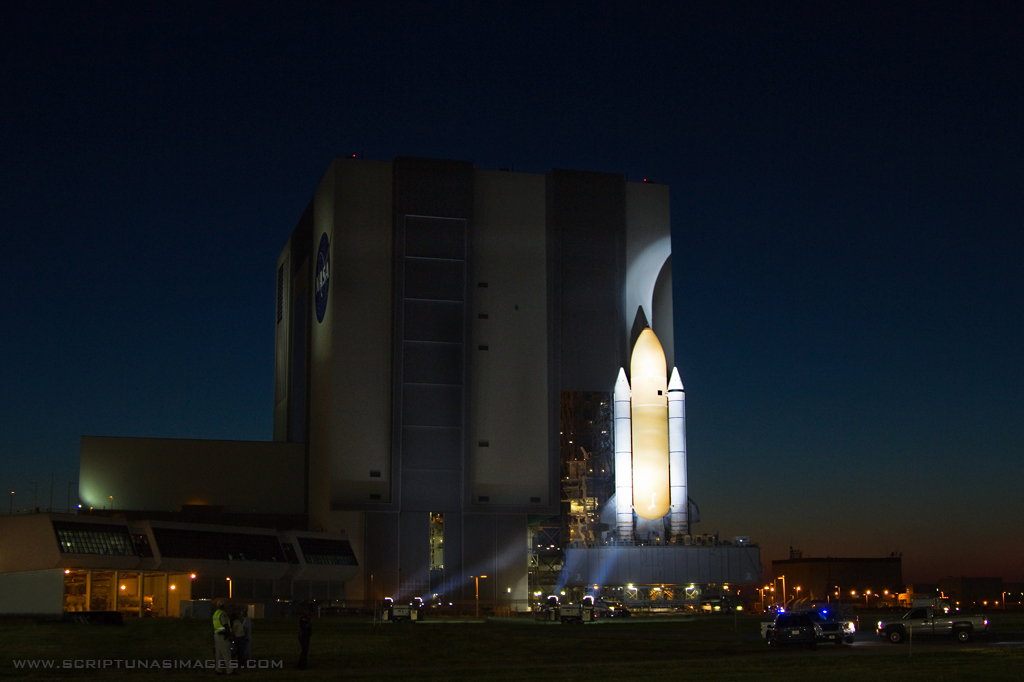
NASA'S Space Shuttle Discovery roll out for it's final "scheduled" launch in Florida

NASA'S Space Shuttle Discovery departs from inside the Vehicle Assembly Building [VAB] for roll out to Complex 39A for mission STS 133 at the Kennedy Space Center in Florida on September 20,2010. The launch is scheduled for November 1,2010 with a crew of six commanded by Steven Lindsey .The Orbiter will deliver the Permanent Multipurpose Module [PMM] with spare parts to the International Space Station during the orbiters final "scheduled" flight.UPI/ Joe Marino-Bill Cantrell.
 
Space Shuttle Discovery Rollout
shuttle discovery last rollout

Space Shuttle Discovery Launch

Crowd Latest Launch From Space Shuttle Discovery: Discovery spaceship’s most traveled around the world, thundered into orbit for the last time on Thursday, heading toward the International Space Station for a trip that marks the beginning of the end of the shuttle era. The six astronauts aboard, all experienced space flyers, were thrilled to be on their way after a delay of almost four months for repairs to the fuel tank. However, he put Discovery on the verge of retirement when he returned in 11 days and possibly a museum leaders.
Discovery is the oldest of NASA’s three space shuttles and the first survivor to be decommissioned this year. Two missions remain, first by Atlantis and Endeavour, then, to finish the 30-year program.
It was the 39th launch of the Discovery shuttle mission 133rd overall.
“Enjoy,” the test driver by radio shortly before takeoff. Commander Steven Lindsey thanked everyone for working in Discovery is ready to go: “And to those watching, get ready to witness the majesty and power of discovery as she raises one last time.”
Emotions ran high as the discovery blew off its seaside pad in an afternoon blue sky and arced over the Atlantic during its farewell flight. There were a few tense minutes before takeoff when an Air Force computer problem arose. The problem was solved and Discovery took off about three minutes late, with only seconds remaining in the countdown.
Discovery reaches the space station Saturday, delivering a small room full of supplies and an experimental humanoid robot. “Rejoice in company with the ISS on here in a few days,” station commander Scott Kelly said in a Twitter message.
The orbiting laboratory has been soaring over the South Pacific when Discovery took off.
“Discovery doing one last reach for the stars,” the mission control commentator once said that the shuttle opened the launch tower.
On the television cameras on board showed a few pieces of insulating foam breaking the external fuel tank four minutes of flight, but should not pose any security problems because it was quite late after takeoff.
NASA is under the direction of the Chair to retire the shuttle fleet this summer, let private companies take more trips to orbit and focus on getting astronauts to Mars and asteroids.
About 40,000 guests gathered at Kennedy Space Center to witness history in the making, including a small delegation of Congress and Florida’s New Governor Rick Scott. frenzy of discovery was not only the launch site, but nearby towns.
The roads leading to the launch site were clogged with cars parked two and three deep; RV hooked first views along the Banana River before dawn. Businesses and governments joined in, offering signs with words of encouragement. “The heavens are to be discovered,” a church proclaimed Cocoa Beach. Foods stored on extra cakes red, white and blue with images of the shuttle. Shops run out of batteries for cameras.
The launch team also got into the act. A contest was held to craft the salutation from Launch Control “. Liftoff final discovery, a tribute to the dedication, hard work and pride of the American team of the Space Shuttle” Kennedy Affairs Office public is normally the dividing line. Souvenir photos of the discovery have been set aside for the auditors in the shooting gallery. Many have posed for group photos.
Lindsey and his crew take a break in the meaning of all this, before boarding the Discovery. They embraced in a group hug at the bottom of the barrel.
Unlike the first attempt back in November, no hydrogen gas leaked during refueling Thursday.
NASA was also convinced of cracks developing in the external fuel tank, nothing serious was found during final testing on the pad. Both problems occurred during the initial countdown at the beginning of November, and repairs took nearly four months. Cracks in the central part of the tank, which holds the instruments, but no fuel, could be dangerous.
Delaying long kept an original flight crew.
Astronaut Timothy Kopra, lead astronaut, was injured when he destroyed his bike last month. Astronaut Stephen Bowen experienced stepped in and became the first astronaut to carry out missions of shuttle return-to-back.
Meals aboard Discovery is Robonaut 2, or R2, to become the first humanoid robot in space. The experimental machine – looking for the man to the waist – remain boxed until after Discovery’s departure. His sister was on the launch site, perched atop a rover, goodbye.
“I’m in space! HELLO WORLD! “R2 said in a tweet sent by a man still on Earth.
Discovery already has 143 million miles to his credit, starting with its first flight in 1984. When this mission ends, the shuttle will be transferred to another 4.5 million miles. And he will have spent 363 days in space and orbit the Earth 5800 times when it returns March 7.
No other spacecraft has been launched repeatedly.
Discovery list of achievements include the provision of the Hubble Space Telescope into orbit, carrying the first Russian cosmonaut to launch a spacecraft from the United States, the implementation of the first rendezvous with the Mir space station with the Russian pilot first woman in the shuttle cockpit, Mercury astronaut John Glenn returned to orbit, and putting shuttle flights back to life after the Challenger accident and Columbia.

Space Shuttle Discovery Pictures

Space Shuttle Discovery Picture
space-shuttle-discovery-last-launch
Space Shuttle Discovery Picture
The Space Shuttle Discovery lifts off from launch pad 39A at the Kennedy Space Center May 31, 2008 in Cape Canaveral, Florida. The Space Shuttle is carrying the main unit of Japan's Kibo science lab to the International Space Station.

Space Shuttle Discovery Picture
nasa
space-shuttle-discovery-launch-pad
Space Shuttle Discovery Pictures